Yraiz Anya Lougheide-Camejo, senior strategist at MOX, explores the trend of Maxxing through a creativity lens
You’ve heard it before. Creativity feels different. Not outright boring, but bland. Like over-processed baby food which has been diluted and stripped of its flavour in an attempt to widen its appeal. Except in reducing its flavour, we’ve also stripped it of its character and its nutritional value. Which makes it feel predictable at most and downright yucky at best.
The Age of Average
Take this year’s MET Gala, as an example. The theme: which “examined the dressed body”, saw designers reimagine the connection between art and the human form, through colour, structure and shape. The overall vibe? SNORE FEST. And not due to lack of talent, (there were a few honorable mentions that made it out unscathed) but the predictable nature of the theme’s executions, yielded pretty expected results. So bland and uninspiring that not even Rihanna could make it worth tuning into.
It’s perhaps unfair to reduce an entire industry to a group of billionaires. But, it is noteworthy that even in the so-called pinnacle of fashion, creativity feels lacking in originality and spice.
And it’s not just fashion. From music, to tech, to food and drink, nobody is safe from the average epidemic. Entire categories are being reduced to a sea of the same. Sans serif type, TikTok jingles and the colour blurple reign supreme, while creativity with edge is nowhere to be found. As with the MET gala designers, I don’t feel creatives are to blame here, rather that the systems around them have been optimised for the wrong things. For efficiency, eyeballs and numbers rather than real feelings.
Mad for Maxxing
Enter the era of the maxxer, a phenomenon so influential, it was immediately added to public lexicon. Originally taken from gaming language, where characters “maximise” a specific trait over another, maxxing represents an insatiable appetite. Ignoring the standard in pursuit of an extreme. Looksmaxxing encourages followers to do whatever it takes to “ascend” to optimal beauty, surpassing the standard by whatever means necessary (even if it means smashing your face with a hammer). Friction maxxing encourages the addition of friction or difficulty in every day tasks, rejecting the smooth averageness that digital life encourages. Two executions. One goal. Commit to an extreme, no matter how impossible, with clarity and conviction.
That was the thinking Puma x Mclaren Race Louder. Formula One is already about intensity. The volume and noise of racers and fans all jumbled into one. Instead of muffling that noise, we amplified it, creating a platform that pushed both brands past their limits. Using Race Louder as both tagline and platform, we created a visual system that felt urgent and unmistakable, built on an energy of escalation. Bold hand-drawn typography. High contrast intensity. Hyper-amplified graphics. Race Louder wasn’t just a campaign tagline, but an attitude and essence that extended across every touchpoint.
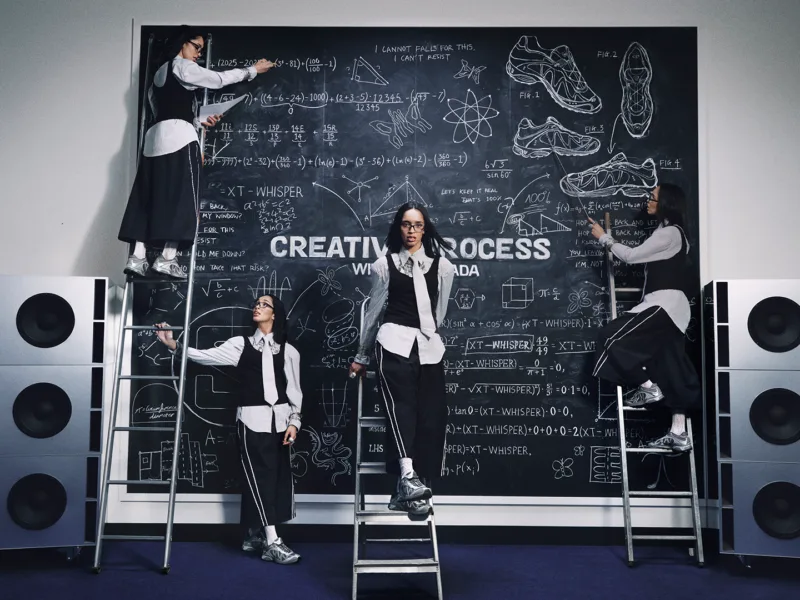
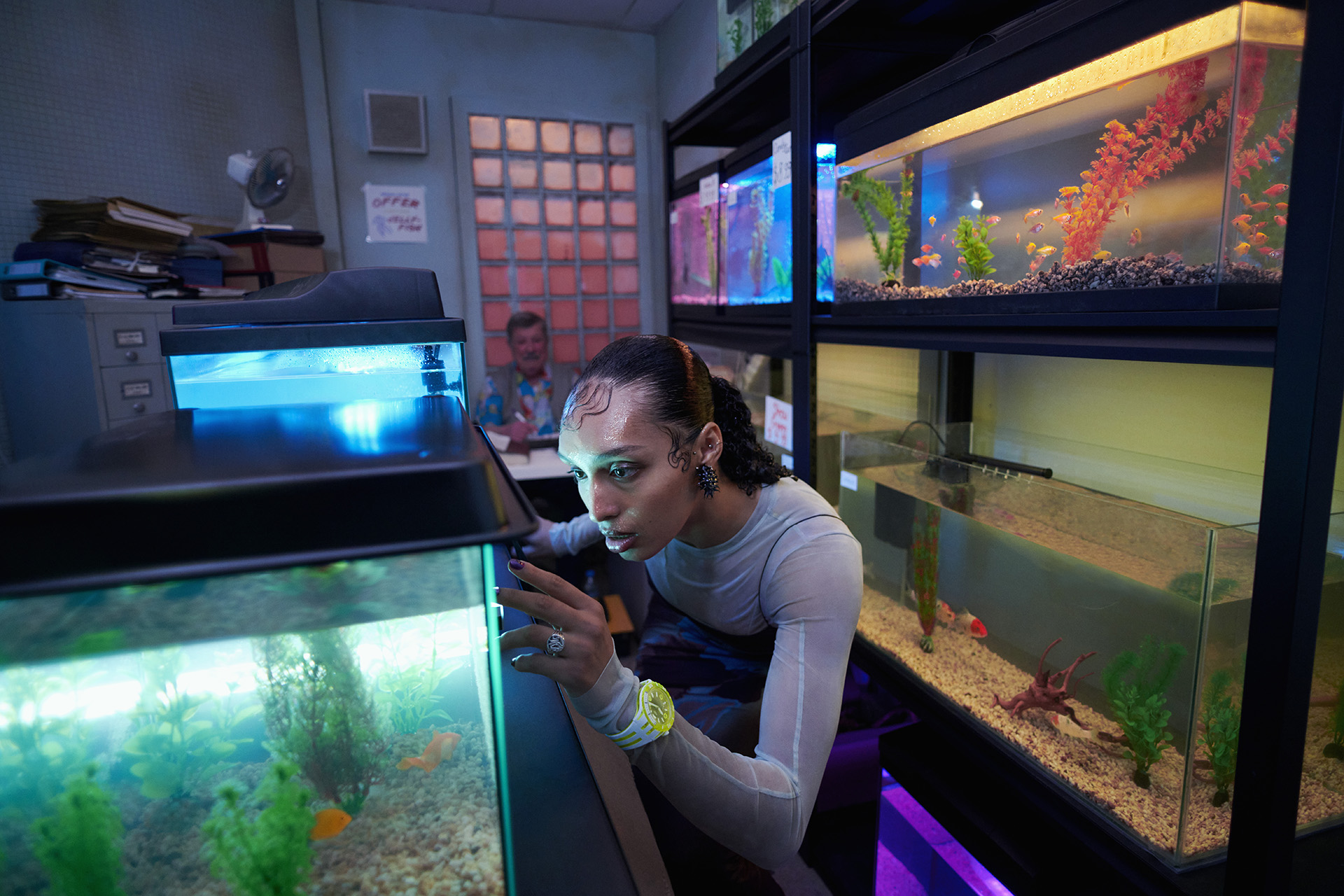
Deutsche Telecom campaign with VTSS uses a similar tactic. Following the DJ as she walks through busy streets and unsettling office spaces, the campaign leans into paranoia and intensity, using doppelgangers and surveillance to show identity theft in a way that feels both unsettling and humorous. Through extreme visuals and a chaotic energy, the campaign engages with gen z followers in a way they can’t ignore, demanding full attention with every camera flash and beat drop.
Similarly, Korean brand Gentle Monster continues to embrace the extreme, literally running head first into chaos in a way only they know how. Their latest spot features resident loooksmaxxer (I know you’ve seen that jaw) Tilda Swinton. For the 2025 Bold campaign, Swinton is set against a backdrop of artificial ravers which bend and swirl at her every command. Rather than shying away from the uncanny aesthetic of AI, Gentle Monster pushes the aesthetic to its absolute extreme with exaggerated, shimmery visuals that feel deliberately strange, but intriguing in their artificiality.
In both cases, the aim is excess. Choosing a lane and sticking with it, to create work that is made for double-takes, through an exaggerated off-kilter pov. But don’t get it twisted. This is not maximising for maximising’s sake. Instead it’s about rejecting ambiguity, staking a claim by running headfirst towards it. Like putting a scotch bonnet in your baby food, (or maybe even six – for the gut health benefits and added kick).
Maxxing to the future
Where algorithms have created a culture much of the same, maxxing offers something purposefully different. It provides a sense of perspective and point of view, even if it’s inherently dangerous (looksmaxxing has been accused of encouraging unsafe practices). By its very nature, maxxing is a rejection of standards, and that’s what makes it so alluring. It’s an attitude that demands conviction and commitment, taking the rules of optimisation, and forcing it into an entirely different direction. One that is boundless and freeing, ruled only by its own ability to, well, max itself out. Because by pursuing the extreme, we stake our creative claim. And in doing so, we give people something to react to. And react with. And that’s anything but average.

